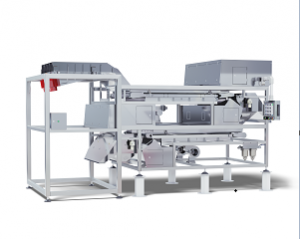

AI Multifunctional Series AI Multifunctional Chute Optical Sorter
AI-Powered Optical Sorting for Food and Recycled Materials
The Techik AI Multifunctional Chute Optical Sorter combines multispectral imaging with ultra-high-definition AI vision to sort materials by color, shape and appearance. It also identifies small impurities and defects such as mold spots, insect damage, paper scraps, hair, film fragments and dust clusters.
AI large-model technology and continuous data iteration support recognition that develops beyond basic color differences. The system combines intelligent analysis with a high-pressure, low-pulse ejector valve system for pneumatic separation of unwanted material.
Key Benefits
• High-purity sorting based on color, shape, appearance and micro-impurity differences.
• Multispectral imaging and ultra-high-definition AI vision.
• Recognition accuracy designed to improve through continuous data iteration.
• Streamlined structure and an efficient pneumatic system for material handling and sorting output.
• Industrial-grade hardware for interference resistance and stable operation in complex environments.
• IoT connectivity for remote monitoring, data analysis, online upgrades and intelligent maintenance.
Sorting Capabilities
| Sorting Need | Recognition Capability | Examples |
| Color and appearance | Identifies visual differences and defects | Mold spots and insect damage |
| Shape | Supports shape-based sorting | Material-specific shape criteria |
| Micro-impurities | Identifies small unwanted material in the product stream | Paper scraps, hair, film fragments and dust clusters |
Applications
The sorter is designed for grains, oil crops, tea, Chinese medicinal herbs, dehydrated vegetables, nuts and seeds, and recycled plastics.
• Grains and oil crops: rice, wheat, soybeans and rapeseed.
• Tea: green tea and black tea.
• Chinese medicinal herbs: astragalus and angelica.
• Dehydrated vegetables: dehydrated radish and other dried vegetable materials.
• Nuts and seeds: sunflower seeds and other nut or seed products.
• Recycled materials: recycled plastic flakes.
AI Vision and Pneumatic Sorting
1. Material enters the chute sorting zone.
2. Multispectral and ultra-high-definition cameras capture material information.
3. AI recognition analyzes color, shape, appearance, defects and micro-impurities.
4. The high-pressure, low-pulse ejector valve system removes the identified reject material.
5. Accepted material continues to the qualified-product stream.
Sorting criteria should be defined for the specific material and quality requirements. Representative samples help establish the defects and impurities to be removed and the appropriate machine configuration.
Designed for Daily Production
Self-learning recognition
Recognition accuracy is designed to improve through continuous data iteration as sorting data develops.
Stable industrial operation
Industrial-grade hardware provides interference resistance and stable operation in complex production environments. The listed operating-temperature range is 0–40 °C.
Easy operation
A simplified appliance-style interface reduces the operating threshold and makes setup and management easier. The system uses a 15-inch display.
Smart operation and maintenance
IoT connectivity supports remote monitoring, data analysis and online upgrades for process optimization and intelligent maintenance. Network communication is listed as 4G with wireless or wired connection options.
Model Selection — TCS-DS1T to TCS-DZ5T
| Specification | TCS-DS1T | TCS-DS2T | TCS-DZ3T | TCS-DZ4T | TCS-DZ5T |
| Ejector Units | 1 × 63 | 2 × 63 | 3 × 63 | 4 × 63 | 5 × 63 |
| Total Power | 1.0 kW | 1.5 kW | 2.0 kW | 2.5 kW | 3.0 kW |
| Air Consumption | ≤ 0.8 m³/min | ≤ 1.2 m³/min | ≤ 1.8 m³/min | ≤ 2.4 m³/min | ≤ 2.8 m³/min |
| Dimensions | 950 × 1675 × 1650 | 1260 × 1675 × 1650 | 1700 × 1700 × 2020 | 2000 × 1700 × 2020 | 2250 × 1700 × 2020 |
| Machine Weight | 480 kg | 650 kg | 800 kg | 980 kg | 1200 kg |
Model Selection — TCS-DZ6T to TCS-DZ12T
| Specification | TCS-DZ6T | TCS-DZ7T | TCS-DZ8T | TCS-DZ10T | TCS-DZ12T |
| Ejector Units | 6 × 63 | 7 × 63 | 8 × 63 | 10 × 63 | 12 × 63 |
| Total Power | 3.4 kW | 3.8 kW | 4.2 kW | 4.8 kW | 5.5 kW |
| Air Consumption | ≤ 3.2 m³/min | ≤ 3.8 m³/min | ≤ 4.2 m³/min | ≤ 5.0 m³/min | ≤ 6.0 m³/min |
| Dimensions | 2650 × 1700 × 2020 | 3000 × 1700 × 2040 | 3280 × 1700 × 2040 | 3900 × 1700 × 2040 | 4500 × 1700 × 2040 |
| Machine Weight | 1400 kg | 1700 kg | 1880 kg | 2200 kg | 2700 kg |
Common Technical Specifications
| Specification | Value |
| Air Pressure | 0.6–0.8 MPa |
| Display | 15-inch display |
| Network Communication | 4G (wireless / wired) |
| Processor | Board-level chip processor |
| Camera Configuration | 2048 × 2048 |
| Solenoid Valve | High-pressure, low-pulse ejector valve system |
| Solenoid Valve Service Life | > 15 billion cycles |
| Light Source Service Life | > 100,000 h |
| Body Material | Carbon steel / stainless steel |
| Operating Temperature | 0–40 °C |
| Power Supply | 220 V AC, 50/60 Hz |
* Solenoid-valve and light-source service-life figures apply to the listed components and do not represent a warranty period for the complete machine.
Frequently Asked Questions
Applications include grains, oil crops, tea, Chinese medicinal herbs, dehydrated vegetables, nuts and seeds, and recycled plastics. Representative samples should be provided for application assessment.
Yes. Hair and film fragments are among the listed micro-impurities, together with paper scraps and dust clusters. Performance should be assessed using representative material and impurity samples.
Recognition accuracy is designed to improve through continuous data iteration as sorting data develops.
Start with the material and required sorting result, then assess required output, installation space, ejector configuration, total power, compressed-air supply and air consumption. The range includes ten models.
Yes. IoT connectivity supports remote monitoring, data analysis and online upgrades. Confirm the wireless or wired communication arrangement for the installation.
Request an Inspection Assessment
Share the material type, representative samples, target defects and impurities, required throughput and accepted-product quality criteria. Include the installation space, compressed-air supply, preferred body material and connectivity requirements so Techik can recommend a suitable model and configuration.